











Fleas On Dogs and Cats and What You Can Do About Them
written by
ManetteKohlerDVM
Tuesday, September 15, 2009
Add this share bar goes here
When pet owners are asked what they dread most about the
summer months, the topic that invariably comes up most is fleas!!
Fleas on dogs and cats! These small dark brown insects
prefer temperatures of 65-80 degrees and humidity levels of 75-85%... so for
some areas of the country they are more than just a “summer” problem. Dogs and
cats often get infested with fleas through contact with other animals or
contact with fleas in the environment. The strong back legs of this insect
enable it to jump from host to host or from the environment onto the host.
(Fleas do not have wings so cannot fly!) The flea’s bite can cause itching for
the host but for a sensitive or flea-allergic animal, this itching can be quite
severe and leads to hair-loss, inflammation and secondary skin infections. Some
pets, hypersensitive to the flea's saliva, will itch all over from the bite of
even a single flea! The flea information presented here will focus on treatment
for and prevention of fleas, which, let’s face it, is just as important to the
pet as it is to the pet's caretakers!
How do you know if fleas are causing all that itching –
formally known as Pruritus? Generally, unlike the burrowing, microscopic Demodex
or Scabies Mites, fleas can be seen scurrying along the surface of the skin.
Dark copper colored and about the size of the head of a pin, fleas dislike
light so looking for them within furry areas and on the pet's belly and inner
thighs will provide your best chances of spotting them. Look for "flea
dirt", too. "Flea dirt" looks like dark specks of pepper
scattered on the skin surface. If you see flea dirt, which is actually flea feces
and is composed of digested blood, pick some off the pet and place on a wet
paper towel. If after a few minutes the tiny specks spread out like a small
blood stain... it's definitely flea dirt and your pet has fleas! Flea dirt may
be your only evidence of a flea infestation but believe the evidence! If there
is flea dirt there are surely fleas present. You need to begin your war on the
pests.
Understanding
The Flea Life Cycle
In order to understand how and why treatment options work,
we must first understand the flea’s life cycle since the various modern
treatment and prevention products work on different parts of this life cycle.
There are several stages to its life cycle: egg, larva or caterpillar, pupa or
cocoon, and adult. The length of time it takes to complete this cycle varies
depending upon the environmental conditions such as temperature, humidity, and
the availability of a nourishing host. Yes... the various flea stages are quite
resistant to freezing temperatures. The flea's host is a warm-blooded animal
such as a dog or cat (or even humans!) The adult female flea typically lives
for several weeks on the pet. During this time period she will suck the
animal’s blood two to three times and lay twenty to thirty eggs each day. She
may lay several hundred eggs over her life span. These eggs fall off of the pet
into the yard, bedding, carpet, and wherever else the animal spends time.
These eggs then proceed to develop where they have landed.
Since they are about 1/12 the size of the adult, they can even develop in small
cracks in the floor and between crevices in carpeting. The egg then hatches
into larvae. These tiny worm-like larvae live among the carpet fibers, in
cracks of the floor, and outside in the environment. They feed on organic
matter, skin scales, and even the blood-rich adult flea feces. The larvae grow,
molt twice and then form a cocoon and pupate, waiting for the right time to
hatch into an adult. These pupae are very resilient and are protected by their
cocoon. Pupae can survive quite a long time, waiting until environmental
conditions and host availability are just right. Then they emerge from their
cocoons when they detect heat, vibrations and exhaled carbon dioxide, all of
which indicate that a host is nearby. The newly emerged adult flea can jump
onto a nearby host immediately. Under optimal conditions, the flea can complete
its entire life cycle in just fourteen days. Just think of the tens of
thousands of the little rascals that could result when conditions are optimal!
Knowing this life cycle allows us to understand why it has
always been important to treat both the host animal and the indoor and outdoor
environment in order to fully control flea numbers. Simply sprinkling some
flea
powder on your pet will not work; simply
vacuuming the home vigorously will not work, simply placing a
flea
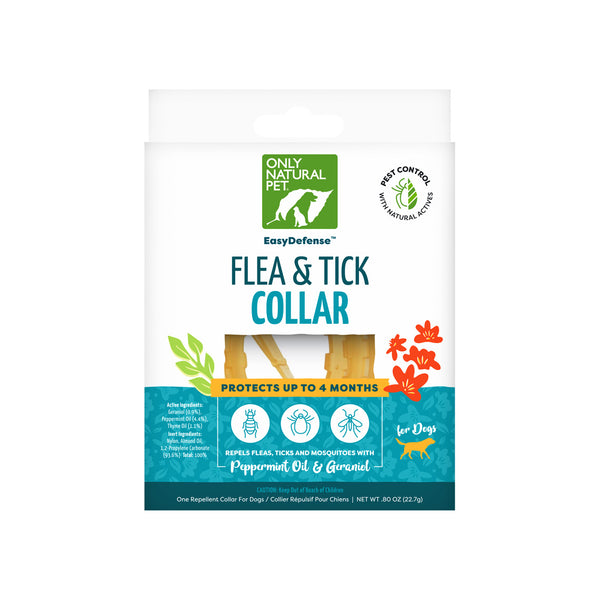
collar or using a
flea
topical on your pet will not work. There
are a wide variety of flea products on the market today, but the newer
prescription products are finally taking the frustration out of flea control
with popular and highly effective brands like:
Frontline
Plus,
Revolution,
K9
Advantix,
Advantage,
Bio Spot. In some
cases it is even possible to gain control by treating only the pet. One of
these products is called
Program
(by Novartis). It is given orally once per month
for dogs and cats, or by injection every six months for cats. The adult flea is
not harmed but the eggs she lays will not hatch, thus breaking the life cycle
of the flea; with no reproduction the flea population eventually dissipates as
long as the pet isn't coming in contact with new fleas continually. In warm
climates, this treatment is typically year round, but in other climates
treatment should begin in early spring before the flea season starts. This may
not be the product of choice for animals that are allergic to flea saliva (have
flea bite hypersensitivity) since the adult fleas are not killed and are still
able to bite the animal.
On
The Pet...
NOTE! Some very interesting new flea
control products are now available...
ask your veterinarian about these "next generation" flea control
products.
Commonly Used Prescription Flea Products
Browse the extensive line-up of prescription flea control products at
NationalPetPharmacy
|
Frontline Plus
|
Advantage
|
Program
(by Novartis)
|
Capstar
|
Revolution
|
Sentinel
|
K9
Advantix
|
Topically Applied
|
Topically Applied
|
Oral Medication
|
Oral Medication
|
Topically Applied
|
Oral Medication
|
Topically Applied
|
Each of these products kills the adult fleas which are
present on the animal. The adult fleas often don’t even have a chance to bite
the animal with these topical products which makes them a good choice for
flea-allergic pets. They are typically applied once per month, although
Frontline
Plus is labeled to control fleas on cats
for one month and up to three months in dogs.
Frontline
Plus also controls ticks when used
monthly.
Revolution
is labeled not only for use against fleas and ticks. Your veterinarian will
have specific preferences regarding each products' most efficient usage. For
more information on these products, consult your veterinarian. Technically
speaking
Program (by Novartis)
are not prescription-only, although they are only made available through
veterinarians.
Capstar® is
approved for use in cats and dogs and is available through veterinarians and
online. It is not a prescription product.
Capstar is a tablet that kills fleas and does it very quickly. It
has no residual action and is useful if you want to quickly eliminate a new
flea infestation before using a long term preventive. There are many other
products which will kill fleas on the pet and for which no prescription is
needed. The drawback, however, is that some of these products may be less
effective than the prescription products, but many really do help control flea
populations. These non-prescription flea products include
flea
shampoos, f
lea
powders,
flea
sprays,
flea
collars and
spot-on products.
With
any flea treatment it is necessary to treat all of the animals in the home in
order to achieve complete success.
In
the environment...
If you find yourself in the midst of a flea infestation, you
will likely need to treat not only the pets but the indoor and outdoor
environment. When treating the indoor environment it is important to wash all
bedding in soapy, hot water especially if the pets spend time on your bed. All
of the carpeting should be vacuumed thoroughly and the vacuum bag thrown away.
Steam cleaning the carpet can kill some of the larvae as well. Remember,
though, that vacuuming and shampooing a carpet will still leave a good
percentage of live fleas so some sort of chemical treatment may be necessary.
The entire house is now ready to treat. Several choices are
available including highly effective
foggers. The most effective products are those which contain both
an ingredient to kill adult fleas and an ingredient to kill the other life
cycle stages. The latter is called an insect growth regulator. Methoprene is
one such growth regulator. Aerosol foggers may not penetrate well enough, in
some cases, to kill all the hiding fleas and larvae. Another option for indoor
control is a sodium borate product that is applied to carpeting. You should
consider calling a local exterminating company for an estimate and a guarantee
that their procedure will rid your premises of fleas. Always follow exactly any
label instructions for amount to use and methods of application. Flea
eradication won't be cheap, either, but what price will you put on living free
from flea infestations?
As for outdoor control, sprays and pelleted insecticides are
generally used after dog houses and kennels are cleaned thoroughly. An insect
growth regulator is a good choice here as well. Pyriproxifen, which is sold
under the trade name Archer or Nylar, is more stable in sunlight and lasts
longer outdoors than Methoprene. It is important to know that the Environmental
Protection Agency (EPA) has banned the insecticide Chlorpyrifos (Dursban).
Production ceased in December of 2000. Certain non-toxic nematodes (tiny worms)
can also be spread in areas of the yard which are warm and moist and which pets
and fleas frequent. The nematodes feed on the flea larvae. And once there is a
cover of snow on the ground, much of the major source of fleas is eliminated.
You should now be armed with the knowledge to prevent and
control even the worst flea infestations which may come your way. Be sure to
consult your veterinarian regarding which methods and products will be best for
you and your pets. Your veterinarian will be your best source for current flea
information. It's a battle, so... good luck and happy flea control!