








![]() ![]()
|
![]()
|
![]()
|
||||||||||
|
America's Pet Store On The Web |
|
Pet Prescription and
non-Rx Meds |
| INDEX OF ARTICLES | WAITING ROOM | EXAM ROOM | SURGERY ROOM | X-RAY ROOM | GENERAL TOPICS | IMPORTANT TOPICS | LAB and PHARMACY | PET PHOTOS | PET SUPPLIES | PET PHARMACY |
|
BLOAT IN A DOG Also known as GASTRIC
DILATATION The x-ray on the right demonstrates the extreme distension of the stomach that occurs with bloat. |
Tail to the left |
|
Head to the right |
Bloat in the dog! There are very few challenges in veterinary medicine that rival an emergency presentation of bloat in the dog. Known by various terms, some more accurate than others, a dog with a bloating stomach has a short time to live without emergency veterinary intervention. Once the stomach is unable to expel gasses produced from fermentation within the stomach, a series of events occur that result ultimately in such intra abdominal pressure that the dog is unable to survive. Circulatory collapse and heart failure ultimately result, after extreme stretching of the stomach wall, constriction of intra abdominal blood vessels, widespread death and destruction of the stomach wall, and release of intestinal toxins. Let's explore what is known about canine bloat and actually see an unusual and relatively uncomplicated case of bloat in a dog.
WHAT IS BLOAT?
Canine bloat occurs when there is gas production in the stomach and that gas
buildup is unable to be expelled via belching or vomiting, or passed through the
intestines and out of the dog as flatulence. Some bloat cases occur very
rapidly when fermentation of grains in the wet and warm stomach environment
create gas. The influence of grain in creating an environment conducive to
bloat seems even more plausible in that it is very rare for dogs that consume
meat-based diets to develop bloat. Generally, bloat is the extreme
dilation of the stomach as a result of gas buildup that cannot escape the
stomach.
WHAT TYPES OF BLOAT ARE THERE?
GASTRIC DILATATION... is simply the expansion of the stomach due to the buildup
of gas or material in the stomach.
GASTRIC VOLVULUS (TORSION)... is the condition where the stomach rotates (flips
on its long axis) and thereby twists the esophagus and small intestine closed so
there is no passage of stomach contents or gas in or out of the stomach.
HOW DOES BLOAT
HAPPEN?
Scientists have tried to decades to learn about how bloat occurs by setting up
bloating conditions in the laboratory with laboratory dogs... and consistently
have failed in producing the spontaneous bloating that occurs with canine house pets.
The usual history is of a dog of a large breed that has recently eaten a meal of
dry dog food and then exercises or engages in some physical
activity. On
occasion, though, there is no history of physical activity and the dogs is
suddenly seen trying to retch and vomit unsuccessfully. The dog paces,
becomes uncomfortable, attempts to pass stool and repeatedly makes retching,
gagging noises. Salivation is common. At this stage it is impossible
to determine what type of bloat is occurring. In the photos above,
the fortunate Malamute had a simple Gastric Dilatation with no torsion or
volvulus. Once the stomach contents and gas were eliminated via a plastic
stomach tube, and the stomach was flushed and antibiotics administered to
prevent further bacterial fermentation and gas production, the surgery was over
and the dog recovered rapidly and successfully. With Torsion or Volvulus
present, far greater damage occurs to internal blood vessels and stomach
tissues, plus the spleen gets caught up in the twisted mess of tissues and
becomes starved for oxygen along with the stomach. Eventually the heart is
affected due to the major interruptions in blood flow and heart rhythms;
plus the pressure on the heart and diaphragm prevents normal cardio-pulmonary
function. When the blood supply in the abdomen’s major arteries is
compromised, blood flow to the heart and the cardiac output decrease, leading to
low blood pressure, and eventually, shock.
The production of gas in the stomach sometimes overwhelms the dog's ability to belch it away or pass it through the bowel as flatulence. There are various theories about the gastric chemistry that occurs to produce this sudden buildup of gas. Plus, many dogs that become uncomfortable as the gas builds up will begin to swallow air, compounding their dangerous condition.
HOW IS BLOAT TREATED?
Treatment needs to be undertaken immediately. Time is a very decisive
factor in the success or failure of correcting bloat. Once presented to a
veterinarian, a dog with bloat will become the center of attention and all other
activities at the animal hospital assume a lesser priority. Supportive
medications such as cortisone, antibiotics and intravenous fluids are started
immediately. The veterinarian may need to decompress the stomach initially
(before surgery) by inserting a large diameter needle into the stomach right
through the abdominal wall. An audible hiss is heard as the gas passes
through the needle. Once this is performed the doctor administers
intravenous anesthetic in very small amounts because the patient in this state
of affairs requires very little intravenous anesthetic to facilitate the passing
of the endotracheal tube through which the gas anesthetic is administered.
Some veterinarians skip the intravenous anesthetic and, via a face mask,
administer gas anesthesia such as Isoflurane... once the patient is unconscious
the endotracheal tube is passed into the trachea to allow continuous control of
anesthesia.
Once anesthesia is at the proper level, a stomach tube (see the photo above) is gently inserted down the esophagus in an attempt to gain entry into the stomach. If there is a Volvulus present and the twisting of the esophagus/stomach junction prevents passing the stomach tube into the stomach, the doctor will need to incise the stomach to dissipate the gas and bring the stomach back to a reasonable state of size and pressure. If no volvulus (twisting or rotation of the stomach on its axis) is present such as in the case presented here, with careful and gentle manipulation by the surgeon within the abdominal cavity the stomach tube can be directed into the stomach and the gas and stomach contents can be drained by gravity out of the dog.
Once the intra-gastric pressure is
lowered the presence or absence of rotation of the stomach can be
ascertained. Also, if a volvulus is present, the spleen is also involved
and often its blood supply becomes strangulated. Occasionally, the doctor
will elect to remove the spleen at this time. The health of the stomach is
established... in cases where the gastric dilatation has been present for hours
and the pressure is very high, the stomach wall will be very thin and stretched
and there may be areas of necrosis
(cell
death). In the photos above a well vascularized stomach wall is evident...
that a god situation. In severe bloat where the stomach is stretched for
long periods, the blood supply is shut down and the stomach wall appears bluish
or blackened. This blackish coloration suggest permanent cell death and
damage. Any time there is necrosis of the stomach wall the prognosis for a
successful resolution of the case is very poor. The massive cell death and
absorption of toxins through the stretched stomach wall creates severe
cardiovascular damage and blood pressure problems. Once a state of shock
begins, the chances of recovery for the patient are slight. Even dogs that
survive surgery and seem to be recovering often succumb to endotoxic shock hours
and even days after the procedure.
When the stomach contents are emptied through the stomach incision, the stomach wall is finally sutured closed. If a volvulus is present the surgeon will rotate the stomach (and spleen) back into the normal anatomical position. Then the stomach tube is inserted through the mouth into the stomach and additional flushing and antibiotic administration is done. Before closing the abdominal incision the surgeon usually will tack (affix with sutures) the stomach wall against the inner abdominal wall (actually just inside the rib area) to prevent future episodes of gastric dilatation/volvulus. This tacking procedure is excellent insurance against a volvulus happening again.
WHAT CAN BE DONE TO PREVENT
BLOAT?
The best suggestions are to feed the dog two small meals a day instead of
one large meal. Do not allow the dog to drink large quantities of water at
one time... have water available at all times. Do not allow exercise or
other vigorous activity for at least two hours after a full meal. Feed a
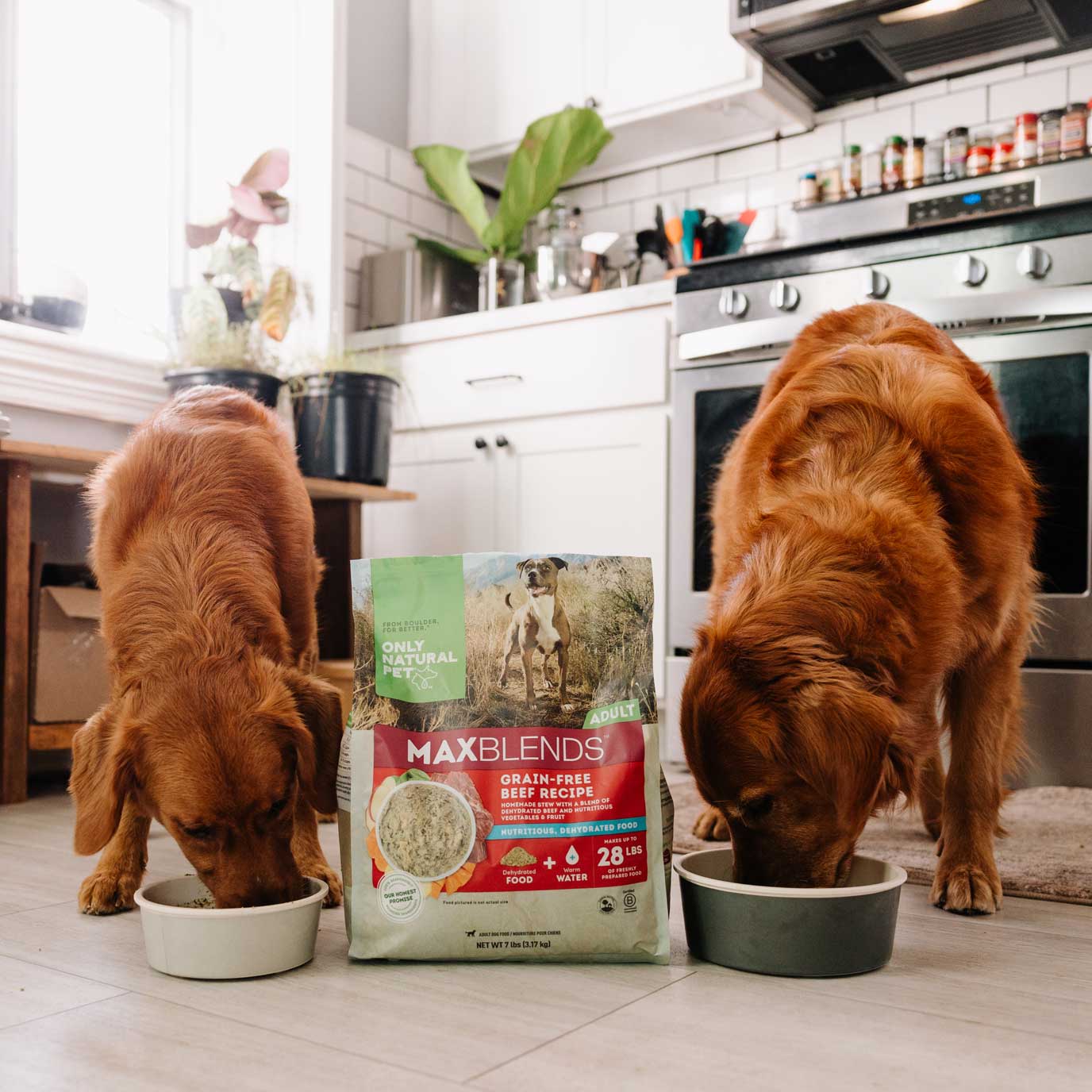
diet composed of more meats and less grain.
Below are photos of a dog that had repeat episodes of gastric dilatation. Luckily, under anesthesia, a stomach tube was able to be passed and the gas and pressure was relieved. The stomach was flushed, appropriate medication was given to help prevent cardiovascular shock, antibiotics were administered to prevent infection and to eliminate gas forming bacteria in the stomach. Usually the stomach is sutured or anchored to the abdominal wall to prevent subsequent bloat episodes.
BREEDS AT MOST RISK...
|
|
Any deep-chested, large breed of dog is at risk for Bloat |
|||
| Akita | Great Dane | Golden Retriever | Malamute | Saint Bernard |
| Irish Setter | Labrador Retriever | Doberman Pinscher | German Shepherd | Wolfhound |
Email a friend and let them
know about this topic.
View more x-rays of BLOAT
CASES
Be sure to tell other pet lovers about ThePetCenter.com
All material on this website is the sole property of ThePetCenter.com. |
Contact reprintrequests@thepetcenter.com for details |
Direct corporate inquiries to PFD@petfooddirect.com |
This site is owned and operated by PetFoodDirect.com |